
You build meals around greens, fruit, yogurt, and whole grains, yet your stomach still feels tight by the end of the day. That mismatch can make you feel like you’re doing something wrong.
The phrase “healthy eating bloating” sounds backwards, but it’s common. Many nutritious foods make gas as they ferment, add bulk, or bother a sensitive gut. Portion size, timing, and your own tolerance often matter as much as the food itself.
A few small shifts can make those meals feel better without turning your diet upside down.
Healthy foods can still create gas, bulk, and pressure
Bloating is a feeling of fullness or pressure in the belly. Sometimes your abdomen also looks more swollen. According to MedlinePlus’s overview of abdominal bloating, common causes include swallowed air, overeating, constipation, and trouble digesting certain foods.
Often, the issue is not that the food is “bad.” Your gut bacteria ferment parts of fiber and certain carbs, and gas is a normal result. If the meal is large, or you are already constipated, that normal gas feels much bigger.
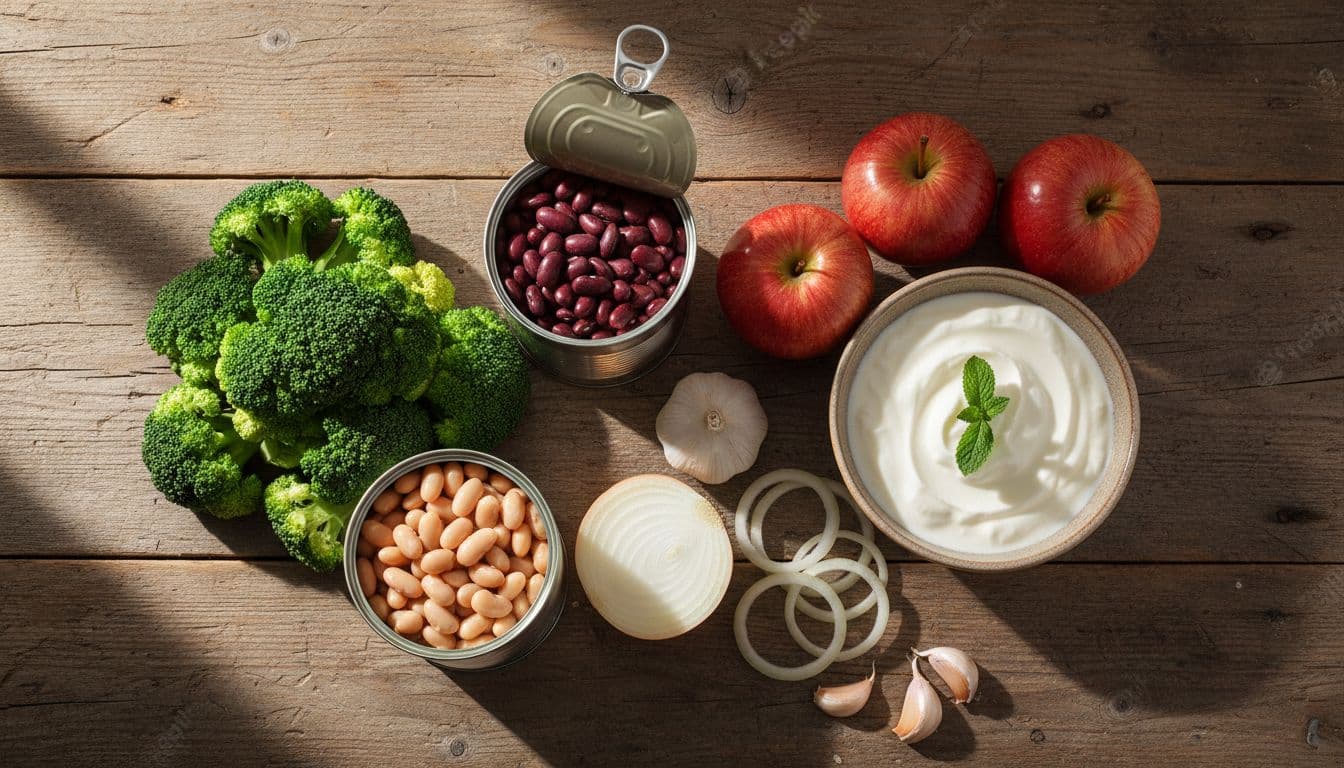
That means a “healthy” meal can still cause discomfort. Beans, broccoli, apples, onions, garlic, and yogurt all offer real nutrition. Still, they can also create gas or pull extra water into the gut in some people.
A huge raw salad is a good example. It may be rich in fiber and low in calories, but it also takes up a lot of space. If you eat it quickly, you add swallowed air on top of that volume. Your gut then has more work to do at once.
This quick comparison helps explain why some nutritious foods feel heavy.
| Food | Why it may cause bloating | Gentler option |
|---|---|---|
| Beans and lentils | Fiber and fermentable carbs can create gas | Start with smaller portions and rinse canned beans |
| Broccoli and cauliflower | Raw texture and fiber can feel rough on a sensitive gut | Cook until tender and keep servings modest |
| Apples, onions, and garlic | Some people react to fermentable carbs in these foods | Try berries, citrus, or cooked onion instead |
| Yogurt or large smoothies | Lactose, fast drinking, or big portions may bother you | Choose lactose-free dairy or split the serving |
Form matters too. Raw vegetables, cold smoothies, and giant bowls of fruit can feel harder than cooked vegetables or smaller portions spread through the day. Healthy is not one-size-fits-all.
Portion size, timing, and gut sensitivity often matter more than the label
Your gut usually likes change in small steps. If you went from low fiber to high fiber in a week, bloating may be your body’s way of asking for a slower pace.
Fiber helps with digestion over time, but a fast increase can feel rough at first. That’s why Northwell’s fiber advice suggests raising fiber gradually and drinking enough water.
Hydration changes the experience too. When fiber goes up without enough fluid, stool may move more slowly. That can add pressure and make you feel puffy after meals.
Meal size matters as much as food choice. A smoothie loaded with fruit, spinach, protein powder, chia seeds, and nut butter might look perfect on paper. In practice, it can be a lot of fiber, fat, and volume in one sitting. The same goes for giant grain bowls or extra-large salads.
Timing can also change how you feel. A rushed lunch often leads to faster bites and more air swallowing. A heavy, high-fiber dinner may sit less comfortably than the same foods eaten earlier in the day.
A food can be good for you and still be too much for your gut in one sitting.
Your own tolerance matters most. One person handles Greek yogurt and apples with no problem. Another feels bloated after both. That difference doesn’t mean either person is eating badly. It simply means bodies don’t read labels the same way.
Simple ways to reduce healthy eating bloating without cutting out good foods
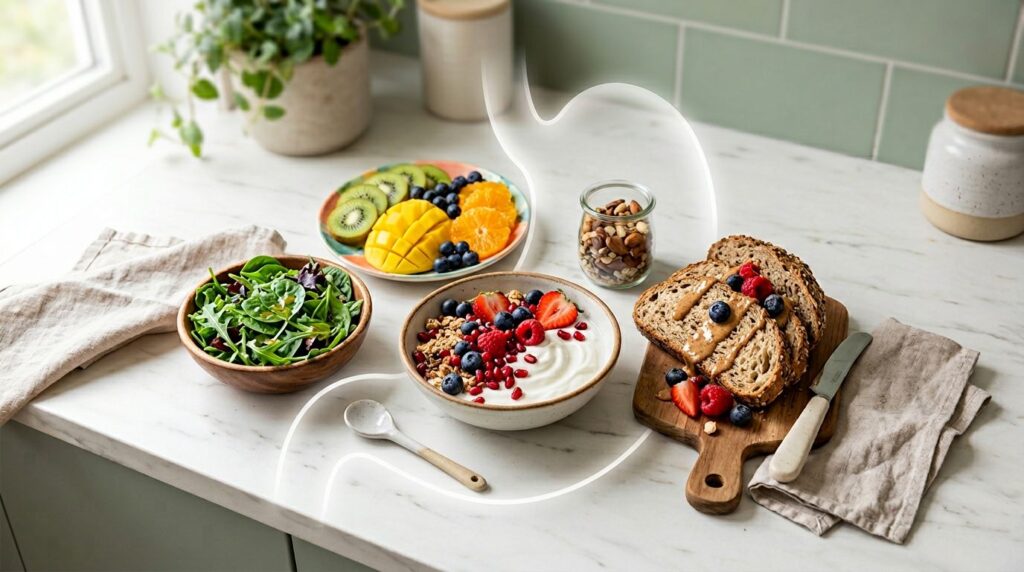
You usually don’t need a full food overhaul. Start with a few basic changes and see what shifts.
Try changing one variable at a time. If you lower beans, start eating slower, switch yogurt, and add probiotics in the same week, you won’t know what helped.
- Slow your meals down. Chew well, put your fork down between bites, and give yourself 15 to 20 minutes to eat.
- Raise fiber in steps. Add one higher-fiber food or a slightly bigger portion every few days, not all at once.
- Check labels on “light” or “sugar-free” foods. Protein bars, gum, flavored yogurt, and drink mixes may contain sugar alcohols that trigger gas or loose stools. Cleveland Clinic’s guide to sugar alcohols explains why ingredients like sorbitol and xylitol can be hard on the gut.
- Test food form, not only the food itself. Cooked vegetables may feel easier than raw ones. Smaller smoothies may go down better than giant ones.
A simple symptom journal can help more than guessing. Write down what you ate, roughly how much, when you ate, and how you felt one to three hours later. Patterns often show up quickly. You may notice that chickpeas are fine at lunch but not at dinner, or that apples only bother you when paired with a protein bar.

Many people find the trigger is a combo, not one food. Apples may be fine alone, yet apples plus a sugar-free bar plus a rushed meal can stack up fast.
Keep the journal simple so you will use it. You are looking for trends, not perfect data. That makes it easier to adjust one thing at a time instead of cutting out half your diet.
If bloating is frequent, severe, painful, or keeps coming back despite these changes, get checked by a qualified healthcare professional. The NHS advice on bloating is a helpful reminder that ongoing symptoms deserve proper evaluation.
A tight stomach after a “clean” meal doesn’t mean you’re failing. It usually means your gut wants a different amount, pace, or combination.
Pay attention to patterns, not labels. When you match healthy food to your own tolerance, meals usually feel a lot better.